
Flaxfarm
News letter September
How much Flax should you have?
Dr Michael Gerger at The Nutrition Facts website originally recommended 1 tablespoon of ground flaxseed per day as part of the daily dozen foods for treating all over health, digestion, and the benefits of supporting the gut biome. N.B. it should always be ground as you don’t get the full benefit otherwise. He has now increased that to up to three tablespoons, especially for certain conditions. Scientific studies that showed benefits to health from using a helping of flax have used between 20g and 45g daily.
Foods That Lower Cholesterol — 24 June 2026
Dr. Greger’s Portfolio Plus Powder Recipes — 1 July 2026
What does a helping of ground flax look like?
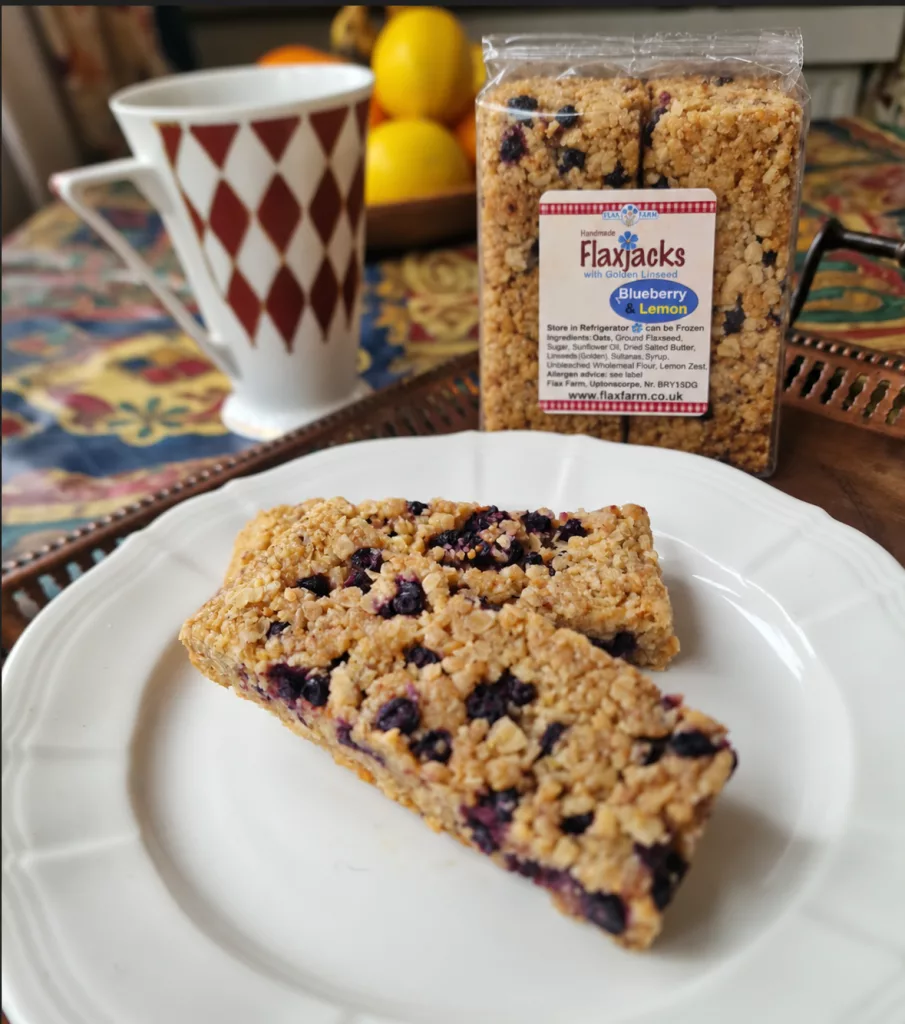
Dr Gregor speaks of tablespoons. I use a standard dessertspoon of Flax Farm ground flaxseed and two of them, well heaped, is around 25g. An easy way to enjoy your flax is Flax Farm Flax Porridge, Muesli and Flaxjacks, delicious, ready-to-go ways of getting a good helping of ground flaxseed.
New Blueberry with Lemon Flaxjacks
For extra yumminess, we added a little fresh lemon juice and grated zest to our Blueberry Flaxjacks – . And for the next month, there is 10% off — use by 4th November.
BLFlaxjack10
Potatoes with Flaxseed Oil & Quark recipe
This German classic comes from lowly peasant traditions and is now loved all round Germany and beyond as a healthy comfort food. It is amazingly good – and for so little effort and healthirnes it’s hard to beat.
Quark is high protein and fat-free so a practical alternative can be strained Greek yoghurt. There are also suitable vegan yoghurts and soft cheese to make a dairy free verson.
The basic recipe is: boil potatoes in their skins, when cooked strain and place on a plate, season the quark with salt and pepper, add a helping to the plate and drizzle over a generous helping of Flax Farm flaxseed oil. If required, top with chopped herbs, spring onions or chopped pickles.
Potatoes with Flaxseed Oil and Quark: A Traditional German Recipe
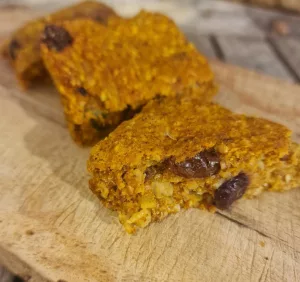
Pumpkin Spice Flaxseed & Oat Bars | No Added Sugar | Recipe
Pumpkin spice time of year! Celebrate with these tasty, healthy bars. These are no-added-sugar, dairy-free, suitable for vegans, gluten-free and low GI
Ingredients: 300 g Flax Farm Fruity Porridge (any Flax Farm fruity porridge or muesli), 212 g pumpkin purée, 35 g almond butter or flaxseed oil, 1½ tsp cinnamon, ½ tsp ground ginger and 1 tsp mixed spice. Add additional sweetener of choice to taste if required.
Method: Put everything in a bowl and mix well. Spread and press into a tray approximately 21 × 14 cm. Bake at 170°C fan for 20–25 minutes. Cool before cutting into 8 pieces.
How Flax was the colour of hair
Tow-headed or towy and flaxen are both old terms for blond hair, and both come from flax.
When flax is prepared for spinning into linen, the stems are retted, broken and scutched to remove the woody material. They are then heckled — repeatedly combed to separate the fibres.
The short, soft fibres combed out are called tow. They are very pale and fluffy, rather like tousled, almost white-blond hair. Hence “tow-headed”, traditionally used especially of very fair-haired children. The word originally referred to hair looking like a bunch of tow — both in its pale colour and its rather rumpled appearance. The long fibres left after heckling look quite different: smooth, straight, lustrous and pale golden, rather like beautifully brushed blond hair. From this comes “flaxen” or “flaxen-haired”, a description of pale golden-blond hair that has been in use since at least the early 1500s.
Flaxen is also used for the very light manes and tails on some chestnut horses.
These are more terms in our language that demonstrate how important and prominent flax once was in people’s lives.

A chestnut Shetland pony with flaxen mane and tail. Photo published by the Free Software Foundation
Create an account to get access and updates when we post new content
Register here