
Anti-inflammatory, Budwig, Diabetes, Flaxfarm, Nutritional, Overcoming Multiple Sclerosis, Weight control, WFPB recipe
Not a Recipe but How I Make My Green Sauces
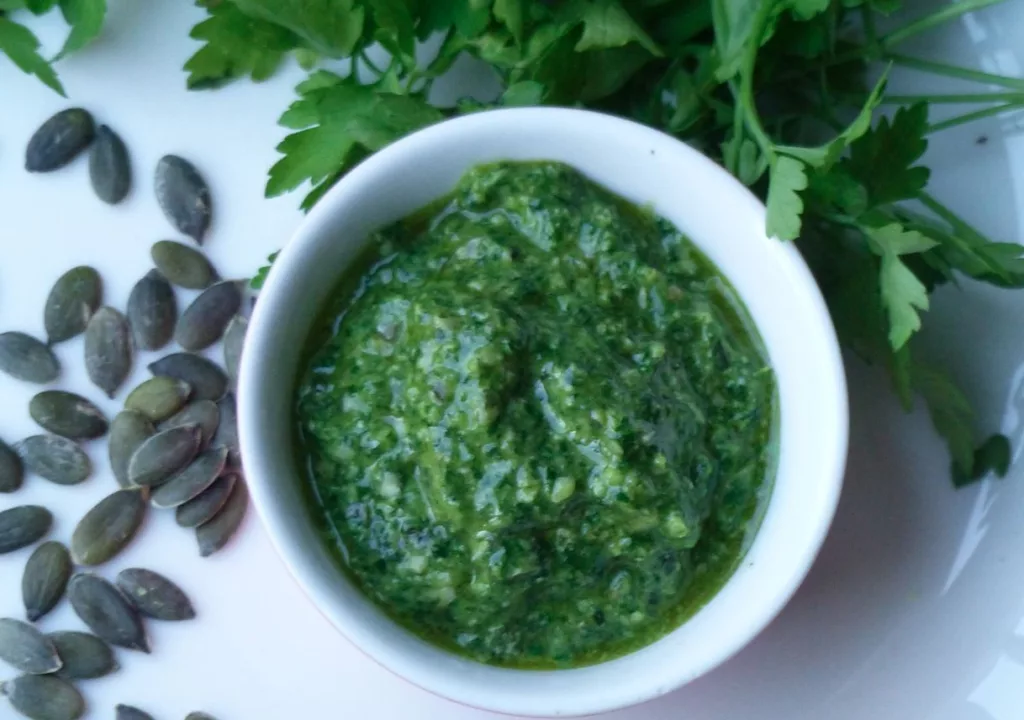
Green Sauces – a great way to add flavour, Flaxseed Oil and get more omega-3 into your diet.
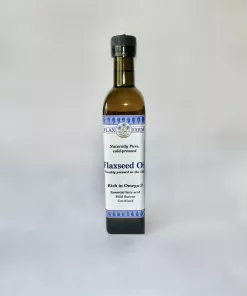
Using our cold-pressed flaxseed oil, I make green sauce every few days. People ask for the recipe, but there isn’t one! I just make it as I go. The ingredients and quantities depend on what I’m going to eat it with, the ingredients I have to hand, what needs using up, and whatever flavours I fancy that day. I tend to use several spices, other herbs, cooked veg, raw veggies, and never any salt. So every batch is a bit different but it’s always tasty and healthy.
Whether you feel you need more plants, flaxseed oil, omega-3, or flavour in your diet, green sauce is a great way to start.
How to Make Green Sauce:
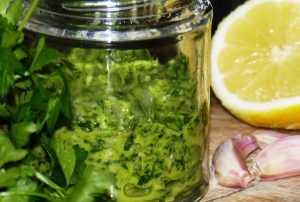
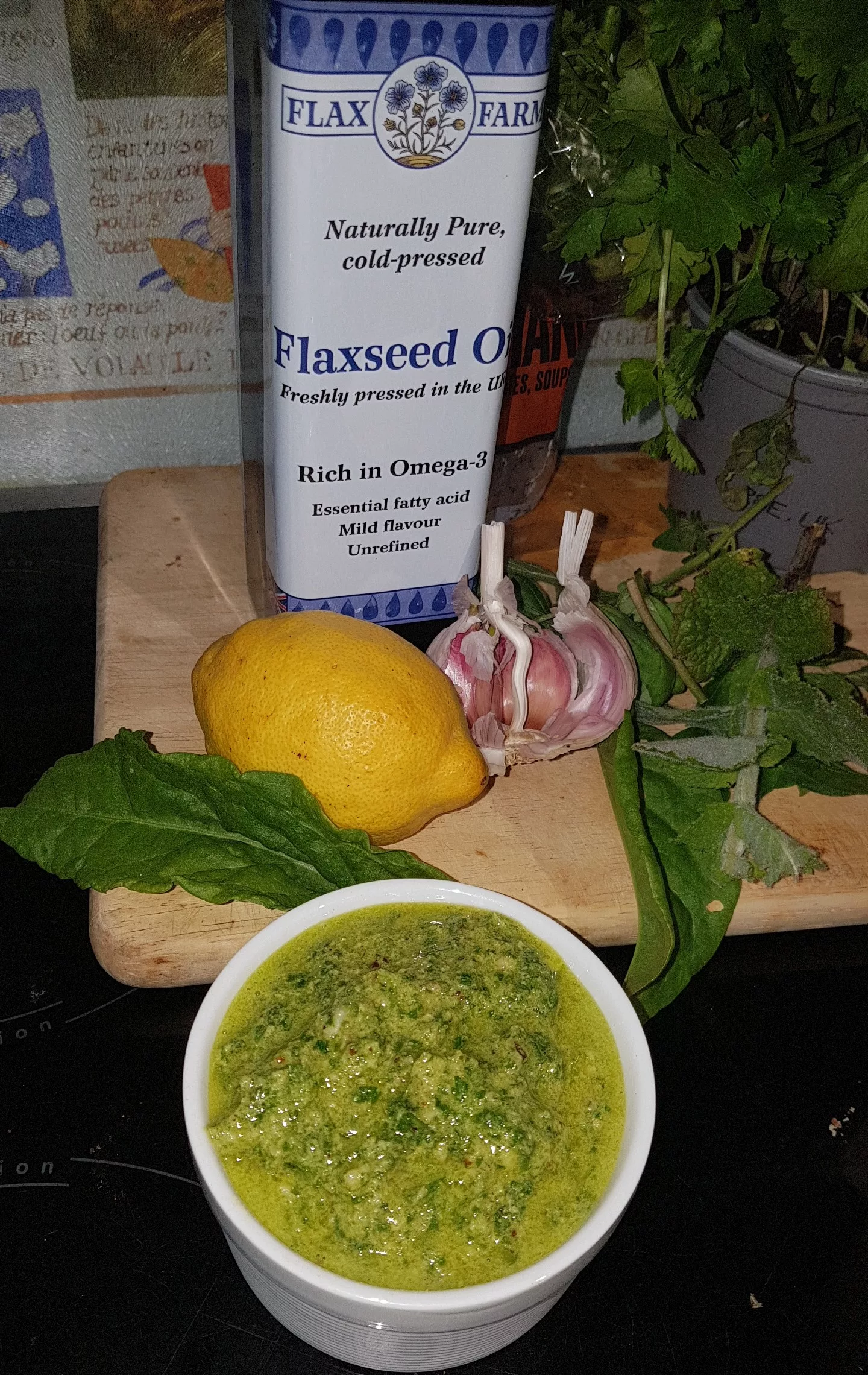
Put a goodly amount of leafy green herbs in a blender. My favourites are: coriander, basil, parsley, tarragon. Add the juice of half a lemon, a clove or so of garlic, some Flax Farm cold-pressed flaxseed oil and blend – adjust the thickness and seasoning – and serve. That’s all there is to it.
I am detailing my thoughts on making green sauces really special and what takes it to the next level of flavour and nutrition.
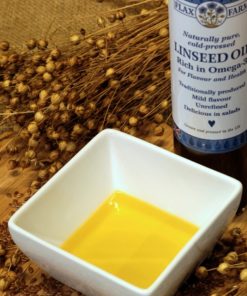
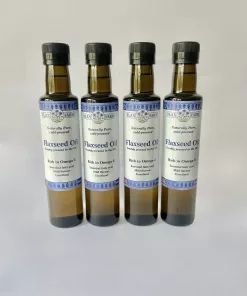
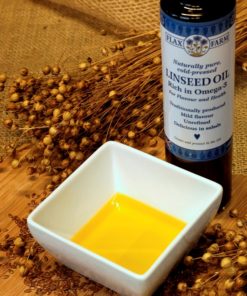
What to eat it with
Green sauce is one of the easiest, tastiest things you can make. It’s very versatile and goes with almost everything. Every time you use it, you add a dollop of goodness from the greens, garlic, spices, flaxseed oil and, most importantly, flavour.
It’s a sauce for pasta, a traditional accompaniment to meat, fish or beans. Add to soups – amazing in lentil soup, added to mayonnaise or vinaigrette, it can transform a bland salad. Good on potatoes and sweet potatoes. I love it on rye bread – as it is, nothing else – a super yummy snack. Good in sandwiches or wraps; brilliant with cheese or use as a dip or pâté.
Although in the UK we mainly think of pesto, mint sauce and chimichurri, almost every country around the world has its own version of a green sauce, with countless regional and family variations.
Fresh, healthy and versatile
My green sauces are based on herbs, some flaxseed oil and fresh vegetables to keep the sauce light. Lemon juice and garlic add the punch that makes adding salt unnecessary
This is a fresh green sauce they’ll last a few days in the fridge, the lemon juice helps. If I’m taking it on a picnic, I might add a pinch of salt, which also helps preserve it.
You’ll need
A small blender is perfect, although a larger food processor works just as well. You could even chop everything finely with a sharp knife or use a pestle and mortar.
Detailed suggestions:
The important thing is to use your instincts and have fun; you’ll learn along the way. Try a new ingredient every week.
- Start with putting a generous amount of herbs in a blender. My favourites are: coriander, basil, parsley, tarragon and chervil. Other herbs that are good to add in, depending on what you are eating it with, are wild rocket, kale or a little mint, especially Bowles apple mint. Thyme, fennel, dill and even lemongrass for Asian-inspired dishes. Don’t worry too much about removing leaves from the stems. If the stems aren’t woody, they blend perfectly well and contain plenty of flavour and healthy fibre.
- Then add:
-
- 1–2 tablespoons (or more) of Flax Farm flaxseed oil
- Black pepper
- 1–3 cloves of garlic
- the juice of half to one lemon
And blend. At this point you’ve already made a delicious green sauce.
Add spices
Now for flavour fun. These are some of the extra flavours I add in. A little turmeric (If you’re adding turmeric, a little black pepper helps increase absorption of curcumin, turmeric’s best-known active anti-inflammatory compound), cumin (jeera), caraway, fresh ginger, paprika, smoked paprika
Use whatever suits the meal you’re serving.
A bit of extra heat
Sometimes I want a little spicy warmth. Dried or fresh chillies, green or red, all work fine. Other sources of heat include cayenne, chipotle and hot paprika. Go gently on the heat and not too much paprika as it can spoil the sauce’s beautiful green colour!
Liquid
How thick or thin you make it depends on how you want to use it. Thickness is totally under your control. And whether you want a thinner sauce or there’s too much leaf to blend properly, You simply add something that contains liquid, like extra oil, juice or vegetables with a high water content, such as green or yellow peppers, celery or cucumber. These add more flavour, nutrition, help the sauce go further and make it lighter with fewer calories.
Give it body
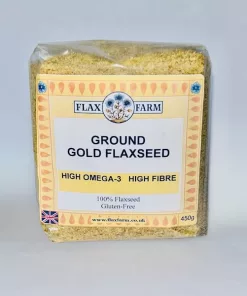
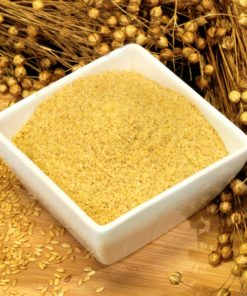
If you want a thicker sauce or more of a pâté-like conistency add these in to add bulk. I use one or more of the following. Walnuts, almonds (soaked – but they don’t need long in warm water) pine nuts, pumpkin seeds, sunflower seeds, cannellini beans, butter beans, chickpeas, cooked peas or broad beans, and avocado work well. Cooked veg, such as spinach (spinach is best used cooked as it goes funny very quickly). A little bit of ground flaxseed – ground gold flaxseed looks best – will thicken it up quickly and easily.
Extra flavour
I usually finish with some extra flavour: Parmesan is traditional in pesto but mature Cheddar is good too. My preference is for
nutritional yeast, this is my superstar ingredient – savoury, tastes nice, a bit like Parmesan but no fat, no salt, low calorie,but lots of protein, B vitamins and fibre – and I add lots of it. After that, it’s down to your imagination and larder; anchovies, a few olives, pickled onions, gherkins and even fruit – I often add raisins or goji berries because that little bit of sweetness is nice.
Finally, blend again until combined and as smooth as you want. That’s it!
No recipe. No measuring. Just taste as you go and enjoy experimenting.
Every green sauce is different, so have fun.
A final note: green sauce stores for up to three days in the fridge and freezes surprisingly well in ice cube trays, giving you ready-made flavour portions whenever you need them.
Typical nutritional highlights
A basic green sauce made from fresh herbs, garlic, lemon juice and flaxseed oil is naturally packed with goodness.
Depending on exactly what you put in it, it is typically:
- Rich in omega-3 from flaxseed oil (ALA, the essential plant omega-3)
- High in vitamin C from fresh herbs, lemon juice and peppers
- Rich in vitamin K, plays an important role in normal blood clotting and helping maintain healthy bones.
- A good source of folate, which supports healthy cell growth
- Rich in protective plant compounds, including polyphenols, carotenoids and chlorophyll from the herbs and greens
- Naturally low in sugar
- Low in digestible carbohydrate
- Low GI (glycaemic index), helping to avoid sharp blood sugar spikes
- Naturally gluten-free
- Naturally dairy-free and suitable for vegan diet, so long as dairy cheese is omitted
- Contains healthy unsaturated fats with no added saturated fat
- A useful source of fibre if vegetables, beans, seeds or nuts are included
- Garlic provides sulphur compounds, including allicin, which is traditionally known for a wide range of health benefits
- A simple way to eat a wider variety of plants, helping increase your weekly diversity of beneficial plant compounds
Heartier green sauce (with beans, seeds or nuts)
- More fibre
- Extra protein
- More filling
- More minerals such as magnesium and potassium.
Create an account to get access and updates when we post new content
Register here